


Behind the Canvas: The Moment I Almost Gave Up
There is a stage in nearly every project where I quietly decide it is going to be a disaster.
Mine hit this Halloween canvas about three weeks in. The bottle was stitched, the jack-o’-lantern grin was done, and the whole piece looked flat and blocky, like a colouring page someone had abandoned halfway through. I held it out at arm’s length, tilted it toward the light, and sent a photo to a friend with two words: “it’s ruined.”
It was not ruined. It was unfinished. But if you have ever stared at a half-stitched canvas and felt your stomach drop, you know exactly what I mean. And if you have not, you will.
That gap between “this looks wrong” and “oh, this is beautiful” is my favourite thing about this craft. That Halloween piece spent its first life as a canvas on stretcher bars and its second as a plump hanging ornament. Black and orange twisted cord frames the edge, purple and orange ribbon bows sit at the top corners, and a striped cord hanger makes the whole thing ready to display. Same design. Completely different feeling.
So let’s talk about the middle, because understanding the middle is what keeps you stitching through it.
Why a Canvas Looks Wrong Before It Looks Right
Part of the problem is that a hand-painted design is beautiful, but it is not the finished object yet. You are looking at a plan, not the project.
Needlepoint is canvas work. We stitch on stiff, open-grid mono canvas and cover every hole with dense diagonal stitches, usually Tent, Continental, or Basketweave. Completely different from cross-stitch, which uses X-shaped stitches on fabric, and from surface embroidery, where stitches sit more loosely on top. In needlepoint, the coverage is the point.
And coverage changes everything. Bare canvas showing through between stitches breaks the design into fragments, so your eye reads the gaps instead of the picture. Fill in the background and the same colours suddenly look richer, the same outlines snap into focus, and the whole composition pulls together. Wool and silk build up into a surface that feels plush, almost velvet-like, and honestly, photographs rarely do it justice.
So when I say your canvas will look better finished than it does in progress, I am not being encouraging. I am being accurate.
The Part Nobody Photographs
Here is what I have learned from my own stash: the doubt stage is normal, and it is temporary.
A stretch of background can look like a solid wall of colour. A small motif can seem oversized before the areas around it fill in. You might start second-guessing a colour you loved when you first opened the canvas. None of it means anything yet, because you are looking at an incomplete picture. A hand-painted canvas gives you a clear guide, but it takes patience to see how the full composition will read under stitches.
Give it a few more evenings before you make any dramatic declarations about your project. Or about your stash. I have made both mistakes.
If you are choosing what to stitch next, our hand-painted needlepoint canvases are all here, and the fall collection is worth a look while the season is still on. A canvas is never only about how it looks on day one. It is about what it becomes after all those cozy evenings.
Finishing Is the Quiet Superpower
Stitching gets all the attention, but finishing is where a canvas becomes an object: a pillow, an ornament, a real piece of decor you can hang or give. Blocking, backing, shape, trim, and construction are what make a stitched piece feel polished and complete.
On my Halloween piece, the trim does more than outline the shape. The black and orange twist echoes the season and gives the edge a tidy, dimensional finish. The ribbon bows add a playful note, and the striped hanger means it will come out every October without me having to think about it. Every small decision makes the piece feel intentional.
A good finisher knows how to read a project and bring out its character. Their work can make colours feel even more balanced and the whole canvas feel finished. It is not a bonus stage or an afterthought. It is part of the creative process, and it deserves a place in your plan from the start.
From Frame to Favourite
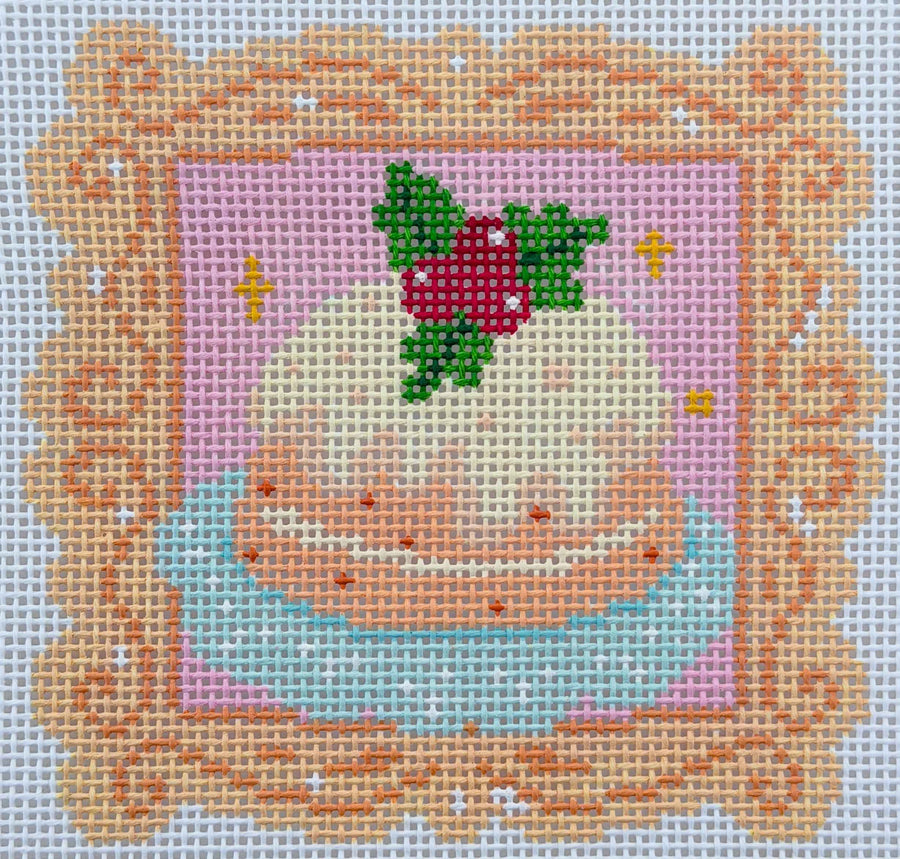
Some canvases seem to know what they want to be. A small design might become an ornament that comes back to the tree every single year. A detailed scene could become a pillow that claims its spot on the sofa each season. Something cheerful like Holly Cake already has holiday charm on the canvas. Stitching and finishing are what give that charm a home.
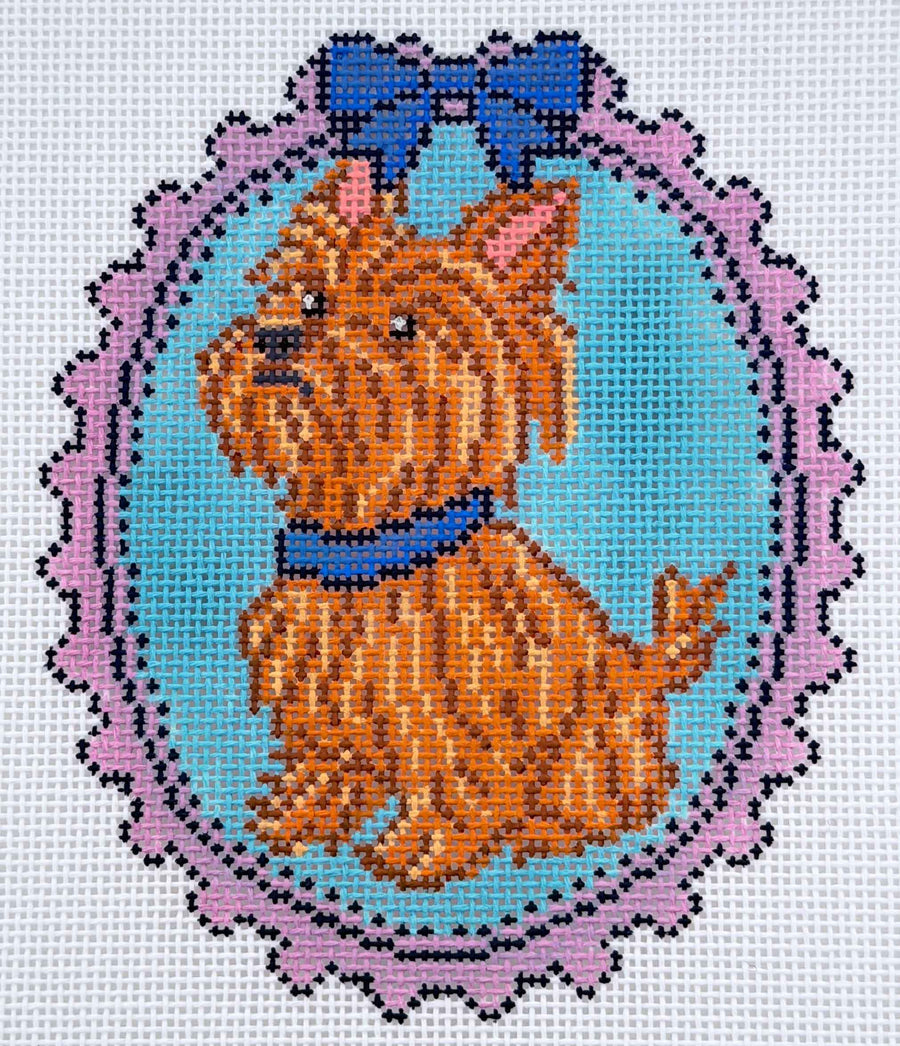
A favourite subject makes an especially good gift. A finished piece carries all the hours and care you put into it, and it is something the recipient keeps long after the wrapping paper is gone. Personal, useful, and made to be kept. Something like Rosie the Yorkshire Terrier makes a sweet little portrait with its own personality.
But the best part is that first look at the finished result. You remember the stretch of background you nearly gave up on, the section that felt too bold, the evening you wondered if it was all coming together. Then you see it finished and think: wait, that is mine?
Yes. Every stitch, every decision, every patient evening. And now it belongs somewhere in your home.
Don’t Let “Someday” Win
I have a pile of fully stitched projects waiting for the perfect moment. Maybe you do too. Sometimes you are deciding on trim, sometimes you are still choosing a finisher, and sometimes you are just saving it for a week when life slows down. No judgment here. The stash has its own calendar.
Still, try not to let “I’ll get it finished properly someday” keep a piece tucked away forever. Finishing does not take anything away from the stitching. It lets the stitching out into the world. If you are not sure what finish suits your canvas, ask a trusted finisher what is possible for the shape and how you plan to use it. One conversation is usually all it takes to picture the next step.
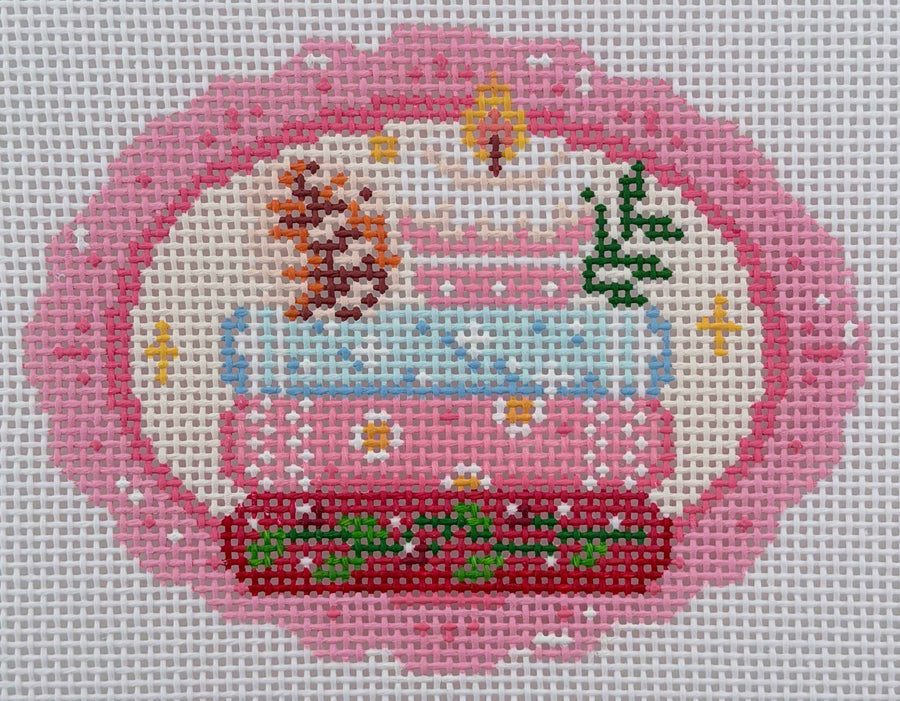
And if the holidays ahead have you thinking about keepsakes, a canvas like A Little Something Sweet is a nice excuse to plan beyond the frame. Will it hang? Sit on a shelf? Become the gift someone brings out year after year? The answer shapes how you stitch it, and it helps you picture the finish as part of the project rather than a problem for later.
Make Room for the Reveal
The surprise of a beautiful finish is not really about the trim or the hanger. It is the moment all those small, quiet choices add up to something you can see and touch. A piece of decor. A seasonal favourite. A gift made with care. Proof that your stitching hours became something real.
So keep going through the awkward middle. Trust the canvas, enjoy the rhythm of those diagonal stitches, and give your finished work a chance to become more than a project in your stash. The next time you turn a stitched piece over in your hands, you may catch yourself thinking, I did not know it could look this lovely.
And that, stitchers, is the best kind of surprise.


